
Federal Government Plans To Feed 50 Million Primary School Pupils By 2026
By Odunuga Yusuf

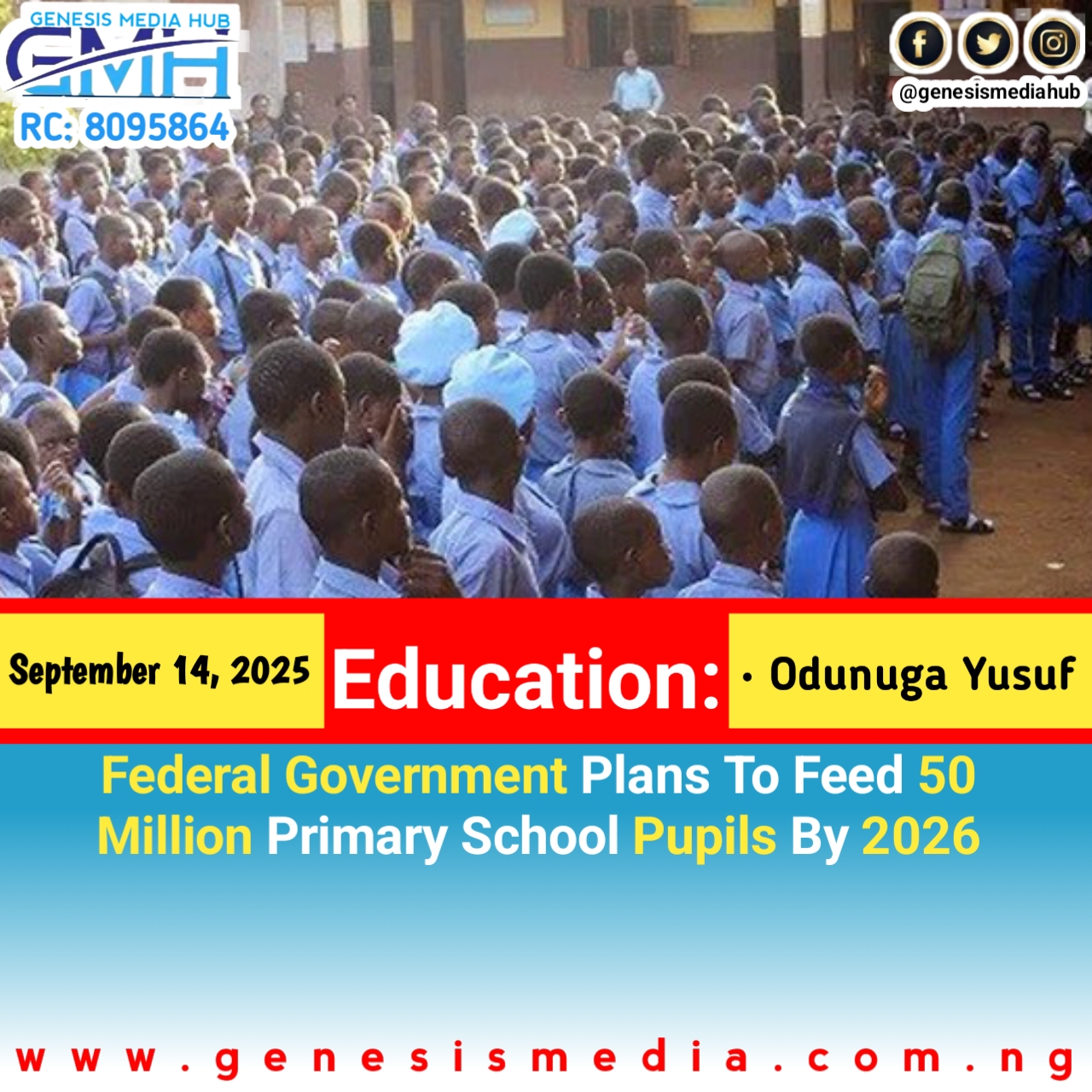
The Federal Government of Nigeria is making strides to expand the National Home-Grown School Feeding Programme, targeting an ambitious goal of providing meals to 50 million primary school pupils by 2026. Aderemi Adebowale, the National Programme Manager of the National Social Investment Programme Agency, shared insights into this plan during an interview with the News Agency of Nigeria in Abuja.
Adebowale detailed that the program aims to incorporate early education levels, specifically targeting pupils in Primary 1 to 3, as well as Primary 4 to 6. Additionally, it seeks to address the needs of out-of-school children, implementing a phased approach for better integration. “By 2026, we are looking to feed close to 50 million primary school pupils across Nigeria,” she stated.

The proposed budget for the school meals is estimated between N500 to N1,000 per child, with Adebowale asserting that even at the lower end of this range, it is possible to provide nutritious and appealing meals daily.
To achieve cost efficiency, the agency plans to form a coalition of small-scale farmers, aggregators, and supply chain partners. “Through this alignment, we will effectively manage prices right from the source. Our target is to agree on prices that ensure a reasonable cost per plate, moving away from fluctuating market prices,” she explained. Adebowale emphasized the importance of coordinating with suppliers, agricultural vendors, and farmers to maintain consistent quality and affordability.
This initiative follows the government’s earlier launch of the Alternate Education and Renewed Hope National Home-Grown School Feeding Project on May 27, 2025. This project aims to deliver meals to 20 million underserved and out-of-school children by the target year of 2026. The program, which commenced under the leadership of the former Minister of Humanitarian Affairs and Poverty Reduction, Prof. Nentawe Yilwatda, has been highlighted as a key element of the National Social Investment Programme.
The initiative is a collaborative effort involving the National Commission for Almajiri and Out-of-School Children Education and the National Identity Management Commission, and it aligns with President Bola Tinubu’s commitment to enhancing social welfare as he marks his second year in office.


