Tinubu’s 50-Point Scorecard: Key Reforms And Projects Reshaping Nigeria


The administration of President Bola Ahmed Tinubu has highlighted a broad range of reforms, infrastructure projects and social and economic interventions undertaken since May 2023, covering the economy, transportation, power, education, youth development, agriculture, healthcare, security and regional development.
The administration says the measures are designed to reposition the Nigerian economy, strengthen public institutions, attract investment, expand opportunities and improve living conditions across the country.

Among the most prominent measures is the removal of the petrol subsidy in May 2023, a policy the administration says has redirected public resources towards development priorities while addressing longstanding concerns around subsidy-related leakages.
The government also unified the foreign-exchange market, cleared more than $10 billion in outstanding FX obligations, and reported improvements in external reserves and trade performance. Other economic measures include efforts to increase non-oil revenue, broaden the tax base, strengthen FAAC distributions and modernise Nigeria’s tax administration through four major tax reform bills.
The administration has also pointed to developments in the capital market, including the significant rise recorded by the NGX All-Share Index during the period, alongside increased investor confidence and efforts to position Nigeria as a more competitive destination for domestic and foreign investment.
In infrastructure, major projects highlighted include the Lagos-Calabar Coastal Highway, the Sokoto-Badagry Super Highway, rehabilitation of national roads, improvements around the Second Niger Bridge and ongoing urban renewal projects in Abuja. The government has also continued the modernisation of key seaports, including Lekki, Apapa, Tin-Can and Onne, with the stated objective of improving maritime efficiency and increasing government revenue.

Read Also:
Why Tinubu’s Continuity Matters: Sustaining The Journey Of Renewed Hope — Hon. Adewale Osho
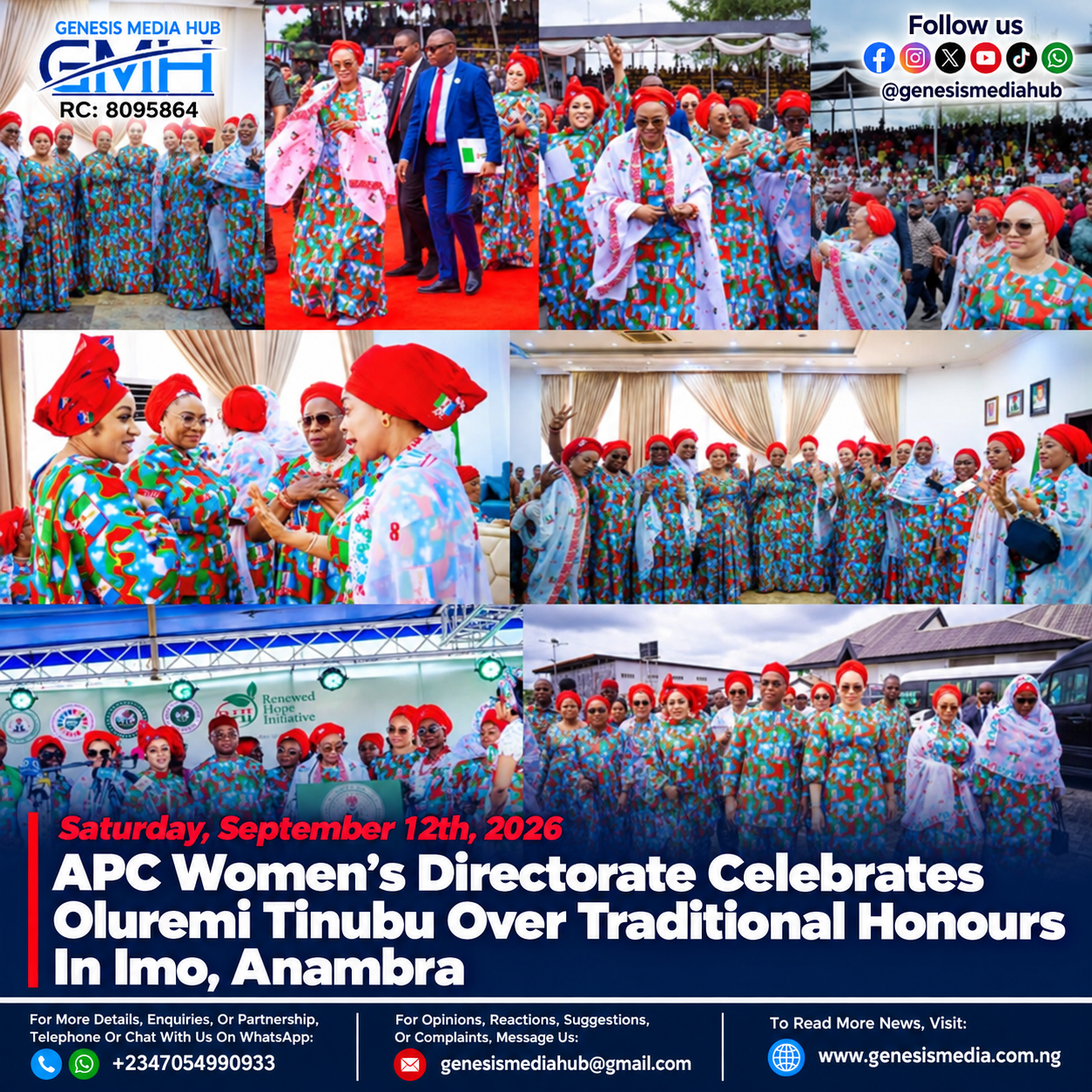
APC Women’s Directorate Celebrates Oluremi Tinubu Over Traditional Honours In Imo, Anambra
The power sector has equally featured prominently, with the implementation of the Electricity Act 2023, which opened greater opportunities for state governments and private-sector participation in electricity generation and distribution. The administration has also highlighted the 700MW Zungeru Hydropower Project and additional interventions aimed at expanding national grid capacity.
In public transportation, the Abuja Light Rail was restored to commercial operations, while railway infrastructure has received increased security and surveillance attention.
Education and youth empowerment have also remained central to the administration’s agenda. The establishment of the Nigerian Education Loan Fund, NELFUND, has provided financial support to students in tertiary institutions, while the 3 Million Technical Talent programme was introduced to equip young Nigerians with digital and technology-related skills.
Other youth-focused interventions include the expansion of the Nigeria Youth Investment Fund, the YouthCred initiative and the Nigerian Consumer Credit Corporation, designed to widen access to credit for young people, entrepreneurs and households.
The administration has further highlighted the Creative Economy Development Fund as an intervention intended to provide financing for musicians, filmmakers, actors, artists and other participants in Nigeria’s rapidly expanding creative industry.
On workers’ welfare, the government signed the new National Minimum Wage Act, increasing the federal minimum wage from ₦30,000 to ₦70,000. It has also promoted compressed natural gas as an alternative transportation fuel, alongside the deployment of CNG buses and the establishment of conversion centres.
Social protection measures cited include expanded conditional cash transfers and financial support programmes for vulnerable households and small businesses, particularly in the aftermath of the petrol subsidy removal.
In healthcare, the administration says it has strengthened primary healthcare facilities through the Basic Healthcare Provision Fund and other interventions, while also commencing the development of specialised oncology centres across the country’s geopolitical zones.
Agriculture has received attention through mechanisation programmes, farmer support initiatives and dry-season production schemes covering crops such as wheat, rice and maize. The deployment of more than 2,000 tractors has also been presented as part of efforts to expand mechanised agriculture and improve food production.
In the solid minerals sector, the government established the Mining Marshals to combat illegal mining and protect the country’s mineral resources, while renewed investment and activity in the mining sector have been cited as part of efforts to diversify the economy beyond oil.
On governance, the administration supported the push for greater financial autonomy for local governments following the Supreme Court’s landmark judgment on local government finances.
The security sector has also remained a major priority, with the government reporting intensified military operations against terrorism and banditry, the neutralisation of several terrorist commanders and the surrender of thousands of Boko Haram and ISWAP fighters and their associates. Improved remuneration, allowances and logistics for military personnel have also been highlighted.
The administration has additionally expanded Nigeria’s national identity registration programme, with more than 118 million people reportedly enrolled in the National Identification Number system.
Another major policy direction has been the creation and strengthening of regional development commissions. Beyond the Niger Delta Development Commission, the Federal Government has established or advanced corresponding regional development structures intended to accelerate development planning and infrastructure delivery across different parts of Nigeria.
Taken together, the 50 initiatives presented by the administration represent its stated record of economic reform, infrastructure development, social intervention, human-capital investment, security enhancement and institutional restructuring since President Tinubu assumed office.
While supporters of the administration point to these measures as evidence of extensive reforms and development activity, the impact of the policies remains a subject of public debate, particularly regarding their effects on household purchasing power, inflation, employment and the wider cost of living.
The central question therefore remains: how will these reforms and projects ultimately translate into sustained economic growth, improved living standards and broader prosperity for Nigerians?